What is rotational grazing?
Continuous grazing can be very damaging to pasture soil and limits the amount of forage available. When plants are eaten repeatedly as they grow, they have no time to recover—losing root mass and the energy needed for regrowth. Allowing the land to rest between grazing periods can produce 30–70% more plant growth. This practice is known as rotational grazing, a system that involves moving animals through different pasture sections to improve soil, plant, and animal health.
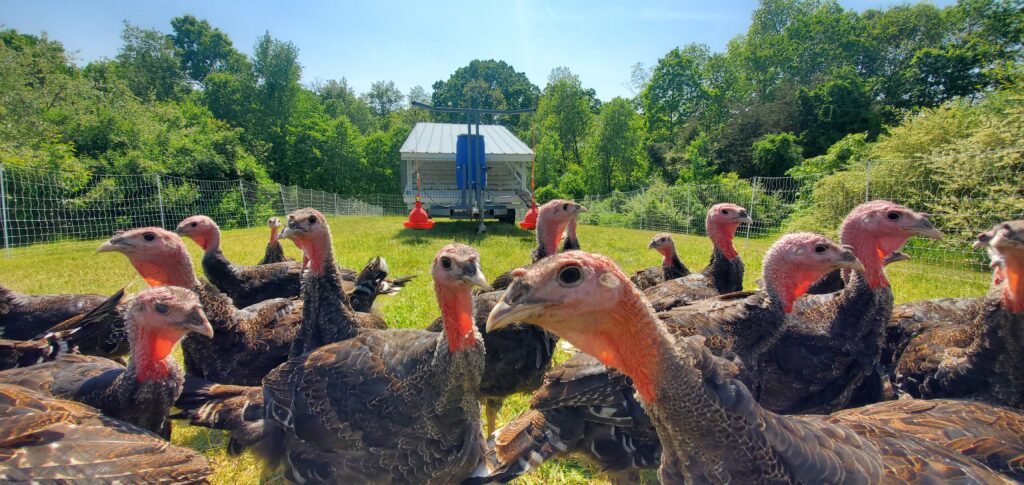
On our farm, we divide large pasture areas with temporary electric fencing for our turkeys, allowing them to stay in each section for three days at a time. Our chickens are kept in mobile “tractors” that are moved daily. In each new area, the birds enjoy a clean environment and the freedom to forage naturally. Once moved, the previously used section rests, allowing the forage plants to recover and deepen their root systems. This root growth, along with the decomposition of old roots, enhances soil fertility and supports healthier, more productive pastures.
What are the benefits of Rotational Grazing?
Animals in grazing systems are often healthier than those housed in confinement, they get more fresh air as well as more space. This freedom of movement encourages physical fitness which in turn creates meat that is better in muscle and lower in fat. Most of the mineral need requirements are met just from grazing, animals get “free choice” to pick what they want to eat and how much of it, whether it be grass or bug/grubs.
Because of the movement to new pasture the animals also get to leave their manure behind for a clean new patch of pasture. Rotational grazing also allows for better manure distribution, meaning that while it acts as a source of nutrients for the soil it is evenly spread out across the pasture.